What Kitchen Remodeling Services Actually Are
Kitchen remodeling services are the professional work involved in updating, redesigning, or rebuilding a kitchen. That covers everything from replacing cabinets and countertops to relocating plumbing lines and rewiring electrical circuits. It can be as simple as swapping out old fixtures or as complex as tearing the room down to the studs and starting fresh.
The kitchen is the most used room in most homes, and it tends to show wear faster than anywhere else. When the layout stops working, storage falls short, or the finishes just look dated, remodeling is the practical fix.
What a Kitchen Remodeling Company Actually Does
A kitchen remodeling company manages the full scope of your project. That means planning, ordering materials, pulling permits, coordinating trades, and completing the physical work. Some companies handle everything in-house. Others bring in licensed subcontractors for specialized tasks like electrical and plumbing.
Here is what that process typically looks like:
- Initial consultation and design: Reviewing your current layout, discussing what you want, and mapping out a plan.
- Material selection: Choosing cabinets, countertops, flooring, fixtures, and finishes.
- Permit applications: Pulling the required permits before structural, electrical, or plumbing work begins.
- Demolition: Removing existing cabinets, flooring, drywall, or fixtures as needed.
- Rough-in work: Framing changes, new plumbing runs, and updated electrical wiring.
- Installation: Cabinets, countertops, backsplash, appliances, lighting, and flooring go in.
- Finishing and punch list: Touch-ups, hardware installation, and final inspections.
The permit step is one people often underestimate. Almost any work involving plumbing, electrical, or structural changes requires a permit. Skipping that step can create real problems when you sell the home.
What Is Included in a Kitchen Remodel
The scope of work depends entirely on what you are changing. That said, most kitchen remodels fall into three general categories.
Cosmetic Updates (Kitchen Renovation)
This is the lightest level of remodeling. The layout stays the same and no trades are involved. Work includes:
- Cabinet refacing or painting
- New countertops
- Updated fixtures and hardware
- Fresh flooring
- New backsplash
These projects are faster and less expensive, typically wrapping up in one to three weeks.
Mid-Range Remodel
Here, you are replacing most of what is in the kitchen without changing the footprint. This is the most common project scope for a mid range remodel:
- Full cabinet replacement
- New countertops and sink
- New flooring throughout
- Updated lighting
- Appliance replacement
- Backsplash tile
Expect a mid-range remodel to run three to six weeks from demo to completion.
Full Gut Renovation
This is the most involved option. Walls come down, layouts shift, plumbing moves, and electrical gets upgraded. Everything is replaced. These projects require the most planning and the most lead time for materials. A full gut renovation typically takes six to twelve weeks, sometimes longer if permit reviews are delayed or if hidden issues come up once the walls are open (which happens more than you might expect in older homes).
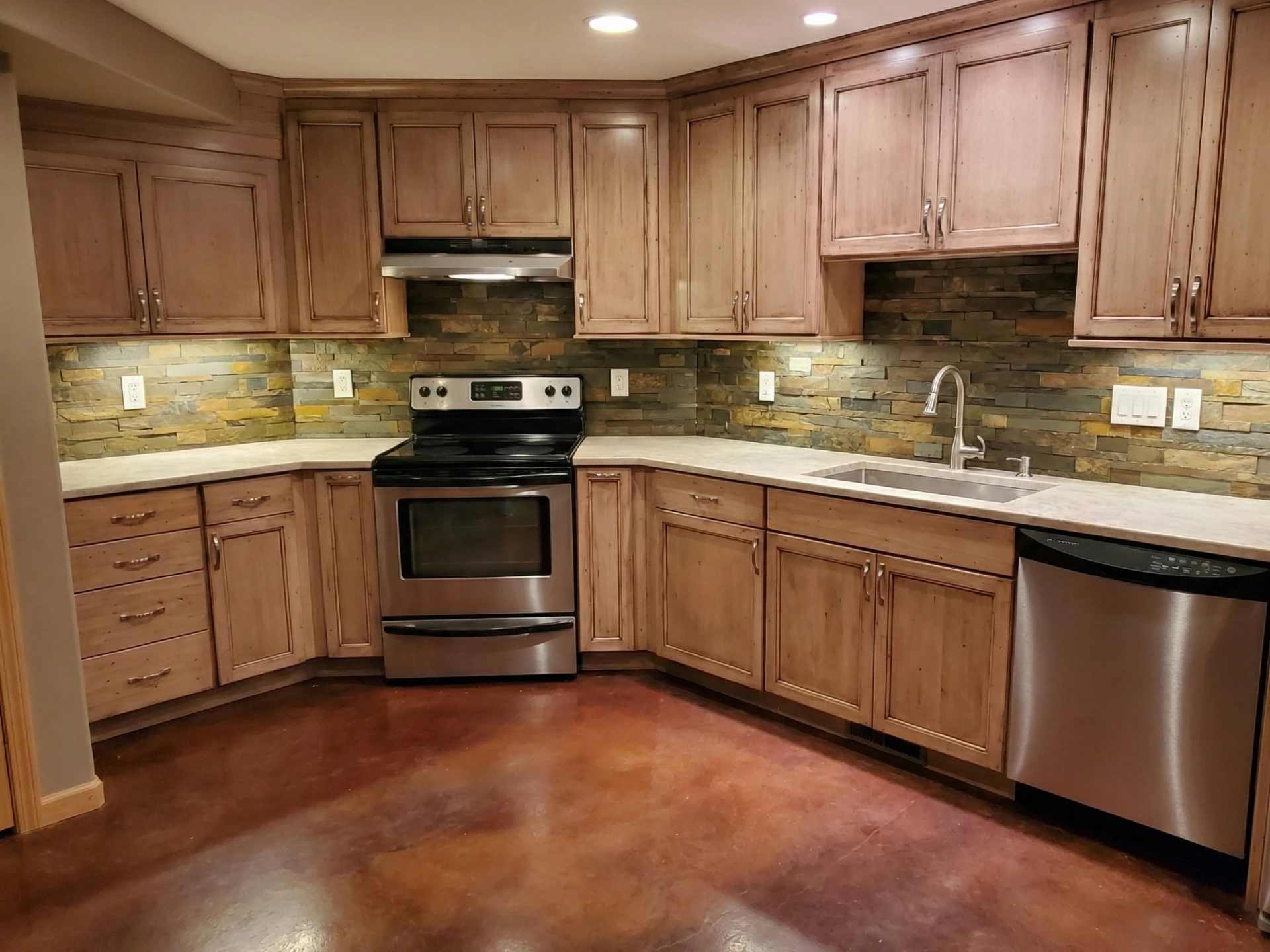
The Core Services That Make Up a Kitchen Remodel
Let’s break down the individual services you are likely to encounter.
Cabinetry
Cabinets are the foundation of any kitchen. You have three main options:
- Stock cabinets: Pre-built and ready to ship. Most affordable, limited sizing options.
- Semi-custom cabinets: More flexibility on dimensions and finishes, moderate cost.
- Custom cabinets: Built to exact specifications. Highest cost and longest lead time.
Cabinet installation is labor-intensive and typically takes two to four days for a standard kitchen.
Countertops
Countertop material affects both the look and the long-term maintenance of your kitchen. Common choices include:
- Laminate: Budget-friendly, wide variety of finishes, not heat-resistant.
- Granite: Durable and natural, requires periodic sealing.
- Quartz: Low maintenance, very consistent appearance, one of the most popular choices right now.
- Butcher block: Warm look, needs regular oiling, can be damaged by standing water.
Flooring
Kitchen flooring needs to hold up to spills, foot traffic, and dropped items. Tile, luxury vinyl plank, and hardwood are the most common choices. Tile is the most durable. Hardwood adds warmth but requires more care near water sources.
Plumbing
Sink relocation, new fixture installation, and adding appliances like dishwashers all require plumbing work. Moving a sink even a few feet can add $500 to $2,000 to the project depending on access and whether the drain slope requires cutting into the floor.
Electrical
Updated kitchens often need more circuits. Code requires dedicated circuits for appliances like refrigerators and dishwashers. If your current panel is older, an upgrade might be needed before any kitchen work can begin.
Lighting
Layered lighting makes a real difference in a kitchen. That typically means a combination of recessed ceiling lights, under-cabinet task lighting, and a statement fixture over an island or peninsula.
How Much Do Kitchen Remodeling Services Cost?
Of course, none of this comes free. Here is a realistic breakdown of what to expect:
| Project Level | Typical Cost Range | Timeline |
|---|---|---|
| Cosmetic refresh | $5,000 to $15,000 | 1 to 3 weeks |
| Mid-range remodel | $15,000 to $45,000 | 3 to 6 weeks |
| Full gut renovation | $45,000 to $100,000+ | 6 to 12+ weeks |
These are broad ranges because kitchen size, material choices, and regional labor rates move the number significantly. A quartz countertop and custom cabinets will cost more than laminate and stock boxes, plain and simple.
One cost factor that catches people off guard: change orders. If you decide to move the refrigerator to the other wall mid-project, or if the old wiring turns out to be knob-and-tube, the price goes up. Plan for a 10 to 15 percent contingency buffer on top of your quoted price.
What Sets a Good Kitchen Remodeling Company Apart
Alright, let’s talk about what to actually look for when hiring.
Not all kitchen remodeling companies operate the same way. Some specialize only in kitchens and bring deep design and material knowledge to every project. Others are general contractors who handle kitchens among many other project types.
Here is what matters most when evaluating a company:
- Licensed and insured: Non-negotiable. Verify this before signing anything.
- Clear contract: Scope, materials, payment schedule, and change order process should all be spelled out in writing.
- References and photos: Ask for completed kitchen projects, not just a portfolio of pretty pictures pulled from the internet.
- Permit knowledge: A reputable company knows what permits your project requires and handles the applications as part of the job.
- Communication: You want regular updates without having to chase anyone down for answers.
The Planning Phase: Where Most Projects Go Right or Wrong
The planning phase is where the outcome of your remodel is really determined. Decisions made on paper are far cheaper to change than decisions made once demo has started.
A few things to nail down before work begins:
- Budget: Set a firm number, then add your contingency buffer.
- Layout: Decide whether appliances and fixtures are staying put or moving. Layout changes are the biggest driver of cost.
- Material lead times: Some cabinets take eight to twelve weeks to arrive. Custom countertops can take two to three weeks after cabinets are installed. Your contractor should build this into the schedule.
- Temporary kitchen setup: If you are doing a full remodel, plan for three to six weeks without a working kitchen. A microwave, coffee maker, and access to a bathroom sink goes a long way.
Common Surprises That Come Up Mid-Project
Here is the thing: even well-planned kitchen remodels can hit unexpected issues once the walls open up. This is especially true in homes built before 1980.
Common surprises include:
- Outdated wiring that does not meet current code and needs to be replaced before new circuits can be added.
- Water damage behind cabinets or under flooring from old leaks, sometimes slow ones that went undetected for years.
- Out-of-plumb or out-of-level walls that require extra work to make new cabinets fit correctly.
- Asbestos or lead paint in older homes, which requires professional abatement before any demo proceeds.
A good contractor will flag these issues immediately and walk you through the options. The cost is real, but so is the risk of ignoring the problem.
Do You Need a Permit for Kitchen Remodeling?
Yes, in most cases. The permit requirement depends on the scope of your project and your local municipality. Cosmetic work like painting, cabinet refacing, or replacing fixtures typically does not require a permit. But structural changes, new electrical circuits, and any plumbing relocation almost always do.
Permits exist to protect you. They trigger inspections that verify the work is done correctly and safely. If unpermitted work is discovered during a home sale, it can hold up closing or require costly remediation.
What to Do Next
If you are considering a kitchen remodel, here is a practical starting point:
- Write down what is not working about your current kitchen. Be specific. Is it storage, layout, the countertops, the lighting?
- Set a realistic budget before you talk to any contractor. Know your number going in.
- Decide on scope. Are you refreshing what is there or starting over?
- Get at least two or three quotes from licensed kitchen remodeling companies. Compare them line by line.
- Ask about timelines and material lead times during the estimate. A company that cannot give you a projected schedule is not ready to manage your project.
Summary
Kitchen remodeling services cover a wide range of work, from cosmetic updates all the way through full structural renovations. A qualified kitchen remodeling company manages the planning, permits, trades coordination, and installation from start to finish. Costs typically run between $15,000 and $100,000 depending on project scale, material choices, and layout complexity.
The key is knowing your goals, setting a clear budget, and choosing a contractor who communicates well and operates with full licensing and insurance. Do those things, and you are already ahead of most homeowners who walk into a remodel without a solid plan.
The kitchen is worth doing right. It is also one of the few home improvements that you get to enjoy every single day.