What Is a Kitchen Peninsula?
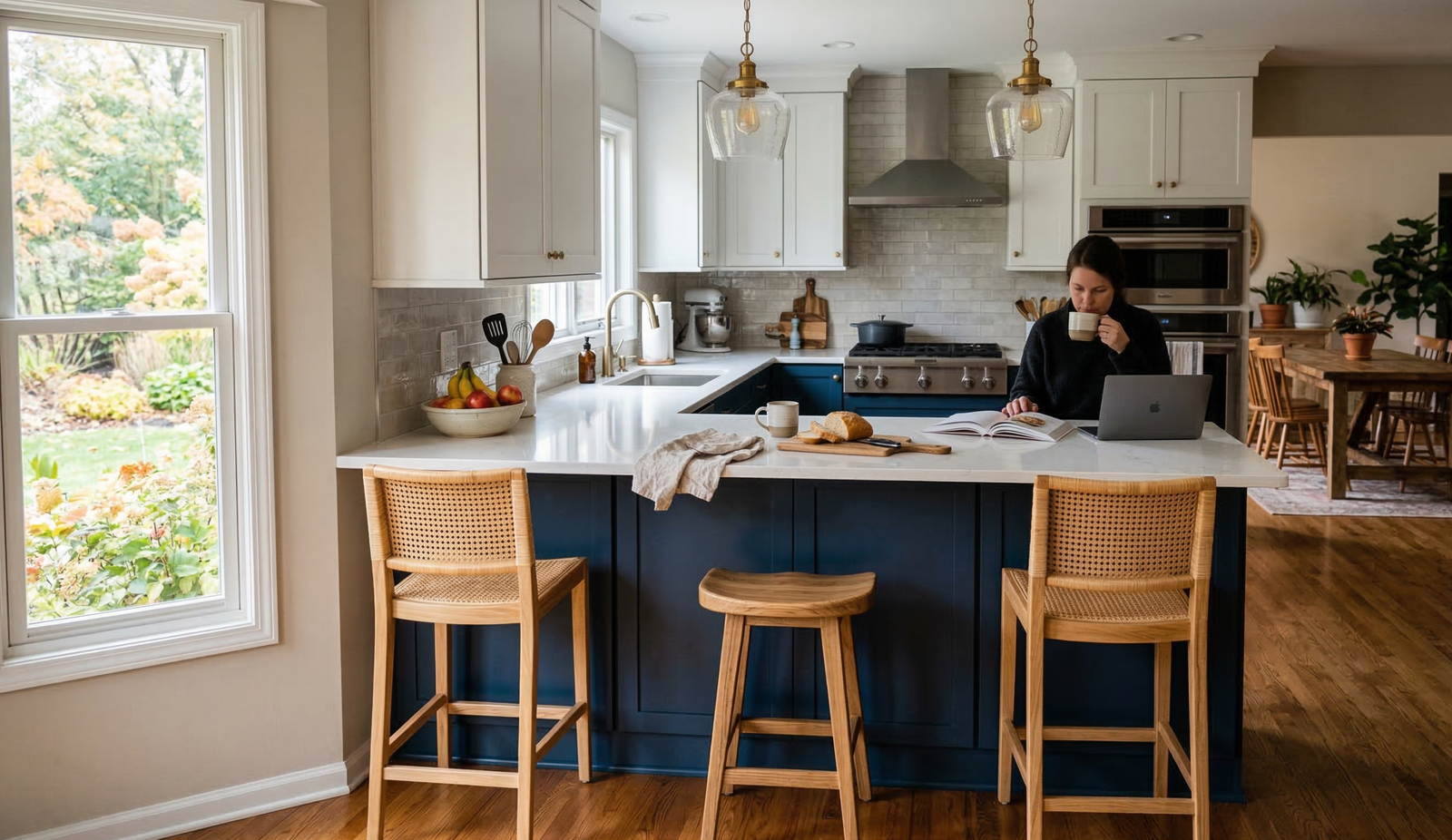
A peninsula is an extension of your existing counter or cabinet run. Think of it as a connected island. One end attaches to a wall, an existing cabinet, or a run of cabinetry, and the other end juts out into the room.
Here’s the thing: peninsulas are often overlooked, but they punch well above their weight. They create a natural divider between the kitchen and a dining or living area, add seating without taking up separate square footage, and typically cost less to install than a full island because they tie into your existing structure.
Common peninsula features include:
- Overhang seating on one or two sides
- Built-in storage below
- Extended countertop workspace
- Optional second sink or prep sink

What Is a Kitchen Island?
A kitchen island is a freestanding unit in the center of the kitchen. It is not attached to any wall or cabinet run. That separation is what gives it versatility — you can design it with cabinets on all sides, install a cooktop or sink in it, add seating around the perimeter, or use it purely as prep space.
Islands work best in kitchens that are at least 12 to 13 feet wide. Anything smaller and you start running into traffic flow problems that can make the kitchen feel cramped rather than upgraded.
Space Requirements: The Number That Matters Most
Before you fall in love with an island design, measure your kitchen carefully. This is where a lot of kitchen remodeling projects run into trouble early.
The NKBA recommends 42 inches of clearance on all working sides of an island. Some code jurisdictions require a minimum of 36 inches. That clearance needs to be maintained on every side, including any side where you will be opening cabinet doors or appliance drawers.
For a peninsula, you only need clearance on the open sides, typically two or three sides instead of four. That is a significant difference in the total footprint required.
A rough guideline:
- Peninsula: Works in kitchens as small as 100 square feet
- Island: Best suited for kitchens 150 square feet or larger
- Both: Require honest measurement before committing to a design
Cost Ranges: What to Budget for Each Option
Alright, let’s talk about money. Neither of these is a small purchase, especially once you factor in cabinetry, countertops, electrical, and plumbing.
Peninsula Cost Range: A basic peninsula with standard cabinetry and laminate countertops can run $2,000 to $5,000. Add stone countertops, custom cabinetry, or electrical work for under-counter appliances, and costs climb to $8,000 or more.
Island Cost Range: A freestanding island starts around $3,000 to $6,000 for prefabricated options with standard materials. Custom-built islands with stone tops, integrated appliances, or specialty finishes can range from $10,000 to $20,000-plus.
If you are adding a sink or cooktop to either option, budget for plumbing or gas line work. That alone can add $1,500 to $4,000 depending on the complexity of the run and your local permitting requirements (and yes, permits are often required for plumbing and gas work, even in a kitchen remodel).
Timeline: How Long Does Each One Take?
A peninsula, because it ties into existing cabinetry and doesn’t require full four-sided clearance planning, tends to move faster. Expect:
- Design and material selection: 1 to 3 weeks
- Permitting (if plumbing or electrical is involved): 1 to 4 weeks
- Installation: 1 to 5 days, depending on scope
An island takes longer when it involves custom millwork or appliance integration. Custom cabinetry alone can have lead times of 6 to 12 weeks from some suppliers. Plan the full project timeline at 4 to 10 weeks from design approval to completion, not counting permit review time.
Material delays are common right now in the remodeling industry, so building in buffer time is not optional, it is a necessity.
Functionality: Which One Works Harder?
Both options add counter space and seating, but how they work in daily life is different.
Peninsulas tend to integrate naturally into the kitchen’s traffic flow. They create a clear boundary between cooking and living spaces without blocking views or movement. They are also easier to add power outlets to since they connect to an existing wall run.
Islands offer more workspace because they are accessible from all sides. Two cooks can work at an island simultaneously without getting in each other’s way. If your household uses the kitchen heavily for meal prep, entertaining, or baking, an island’s open accessibility is hard to match.
That said, a poorly sized island in a tight kitchen becomes an obstacle, not an asset. A well-designed peninsula in a mid-sized kitchen will outperform an oversized island every time.
Resale Value: Does It Matter Which You Choose?
Both add measurable value to a home, full stop. Kitchen remodeling consistently ranks as one of the top return-on-investment upgrades a homeowner can make. According to Remodeling magazine’s annual Cost vs. Value report, mid-range kitchen remodels return roughly 50 to 60 percent of the project cost in added home value.
An island reads as a premium feature to buyers, especially in higher-end markets. But a well-executed peninsula in a kitchen that is properly laid out will not hurt a sale. The overall quality of materials, layout logic, and workmanship matters far more than which option you chose.
Planning Checklist Before You Decide
Before committing to either, work through these questions with your kitchen remodeling company:
- What are the exact dimensions of your kitchen floor plan?
- Where are your existing plumbing, gas, and electrical runs?
- How many people use the kitchen simultaneously?
- Do you want seating, and on how many sides?
- What is your realistic budget, including permits and finish materials?
- Are you planning to sell the home in the next 5 years?
Answering these questions upfront eliminates most of the back-and-forth that slows projects down and inflates costs.
Summary: Making the Right Call
A peninsula is the smarter choice for most kitchens under 150 square feet. It delivers real function, it costs less, and it fits more layouts without forcing awkward clearance workarounds. An island is the right choice when your floor plan genuinely supports it and your budget can cover the full scope, including any plumbing, electrical, or permitting that comes with it.
The worst outcome in any kitchen remodeling project is picking the wrong feature for the space and spending money to fix it later. Measure first, plan with a qualified kitchen remodeling company, and make the decision based on your actual layout, not just what looks good in a photo.