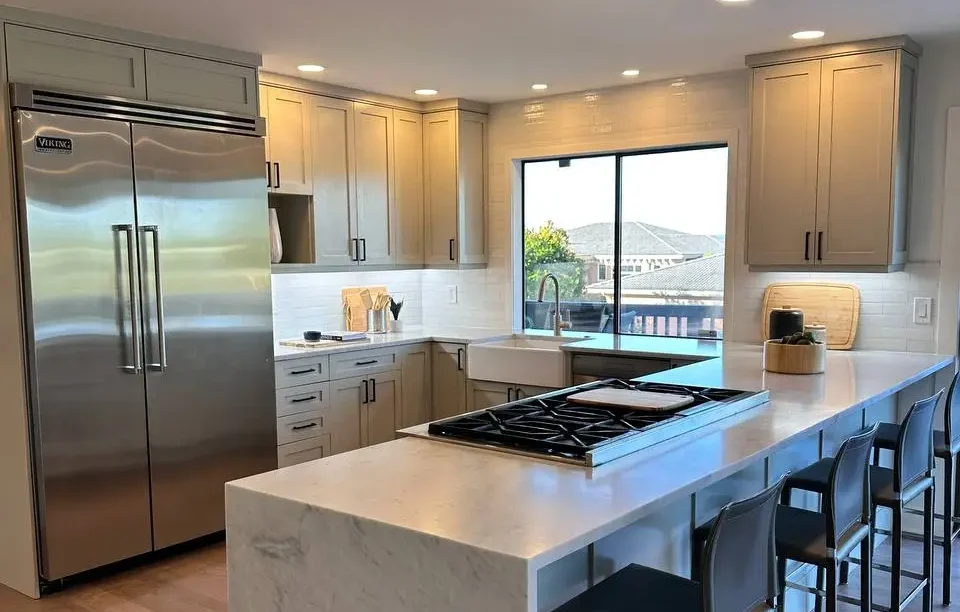
Step 1: Set Your Budget and Know What You Actually Want
Before a single cabinet gets ordered, you need a number. Full kitchen remodels typically run anywhere from $15,000 on the modest end to $75,000 or more for a high-end gut job. Mid-range kitchens usually land between $25,000 and $45,000 depending on your market, material choices, and how much of the layout changes.
Be honest with yourself here. Moving the sink or relocating the range hood sounds simple. It is not. Relocating plumbing and electrical adds cost fast, sometimes $2,000 to $5,000 just for those trades.
Write down what you need versus what you want. Needs go in the budget first.
Step 2: Design the Layout and Choose Your Materials Early
Layout decisions drive everything else. Before demolition starts, you need a finalized floor plan. That means knowing where the cabinets land, where appliances sit, and whether any walls are moving.
Here is the thing most homeowners learn the hard way: material lead times can stretch 6 to 14 weeks for custom cabinets, stone countertops, or specialty tile. If you order materials after demo, your kitchen could sit unfinished for months.
Get selections locked in before the project breaks ground. That includes:
- Cabinet style, finish, and manufacturer
- Countertop material and edge profile
- Backsplash tile
- Flooring
- Fixture finishes (faucet, hardware, light fixtures)
- Appliance models with confirmed delivery dates
Step 3: Pull the Permits
Nobody loves this part, but skipping permits is a serious mistake. Most kitchen remodels that involve electrical, plumbing, or structural changes that require permits, period.
Permit timelines vary by municipality. Some take a few days and others take three to four weeks. Just make sure you factor that into your schedule before demo starts. A good construction company will handle the permit process for you and schedule the required inspections at each phase.
Unpermitted work simply causes problems at resale and can affect your homeowner’s insurance so make sure you do it right the first time.
Step 4: Demolition
Once permits are in hand the demolition begins. Old cabinets come out first, then countertops, appliances, and flooring. If walls are being removed or modified, that happens here too.
Demo day feels fast because it is. But the inspection behind the walls is where surprises live. Older homes often reveal:
- Knob and tube wiring that needs full replacement
- Galvanized pipes past their useful life
- Subfloor rot under old vinyl or tile
- Asbestos in floor adhesives (in homes built before 1980)
These are not rare. Budget a contingency of 10 to 15 percent of your total project cost to handle what the walls are hiding.
Step 5: Rough-In Work (Electrical, Plumbing, HVAC)
This is the phase that happens inside the walls before anything gets covered up. Electricians run new circuits for appliances, under-cabinet lighting, and outlets to meet current code while the plumbers move or add supply and drain lines. HVAC contractors extend ductwork or relocate the range hood exhaust and so on.
All of this gets inspected before walls close and that inspection is not optional.
Rough in work takes one to two weeks depending on the scope. If you are adding a kitchen island with a sink, count on adding extra time. Running a new drain line to an island is more involved than it looks on design renderings.
Step 6: Insulation and Drywall
After rough in inspection passes, insulation goes in on exterior walls, and drywall follows. In kitchens, moisture resistant drywall is standard behind the backsplash area and near the sink.
This step also moves quickly usually lasts two to four days. Tape, mud, and primer prep the walls for paint or tile. Do not rush the drying time between drywall coats. Skipping that step causes visible imperfections that show up after painting.
Step 7: Cabinets and Flooring
Alright let us talk about the phase where the kitchen actually starts looking like a kitchen.
Cabinet installation comes first. Uppers go in before base cabinets so the installers are not leaning over finished base units and get them dirty, this usually takes two to three days for a standard kitchen.
Flooring goes in after cabinets in most cases. Why? Because running flooring under cabinets wastes material and creates unnecessary complexity if cabinets ever need replacement down the road. There are exceptions depending on the flooring type but this is the standard approach for us too.
A few flooring options worth knowing:
- Luxury vinyl plank (LVP): Durable, water-resistant, and installs fast
- Porcelain tile: Long-lasting but adds labor time for installation
- Hardwood: Classic look but needs protection from moisture near the sink
Step 8: Countertops
Countertops are templated after cabinets are installed not before. The fabricator comes out, takes precise measurements, and cuts stone or surfaces to fit. Expect a one to two week wait between template and installation.
Stone countertops are also very heavy and require two installers to get it to be installed right and once they are set and the seams are sealed, the plumber comes back to set the sink and hook up the supply lines.
Do not schedule your plumber before countertops are confirmed and installed.
Step 9: Backsplash, Paint, and Finish Work
This phase pulls the room together. Backsplash tile goes in after countertops are set. Paint happens at the end, not the beginning, to avoid touch-up work from every other trade that came through.
Trim work, crown molding on cabinets, and toe kicks all happen here. These details take more time than most people expect. A thorough finish carpenter doing detail trim can spend a full day on crown molding alone. It is worth it.
Step 10: Appliances, Fixtures, and Final Inspection
Appliances get delivered and installed last. Same with the faucet, light fixtures, and hardware. These are the items that scratch so keeping them out of the way until the end protects your investment.
Final inspection closes out the permit and once that passes, the project is officially complete.
Total timeline for a full kitchen remodel: 6 to 12 weeks for most projects. Larger kitchens with structural changes or custom materials can run 14 to 16 weeks.
What to Think About Before You Hire Anyone
Before reaching out to a construction company, get clear on three things: your real budget including contingency, your layout goals, and how long you can manage without a functional kitchen. Those answers will shape every conversation you have with contractors and help you get accurate quotes instead of ballpark guesses.
Get a minimum of three bids and make sure you ask each contractor to break out labor from materials so you can compare apples to apples. Check licenses and insurance. Ask how they handle permit pulling and inspection scheduling.
Kitchen remodeling done in the right order produces a result that holds up. Done out of order, it produces callbacks, rework, and headaches.