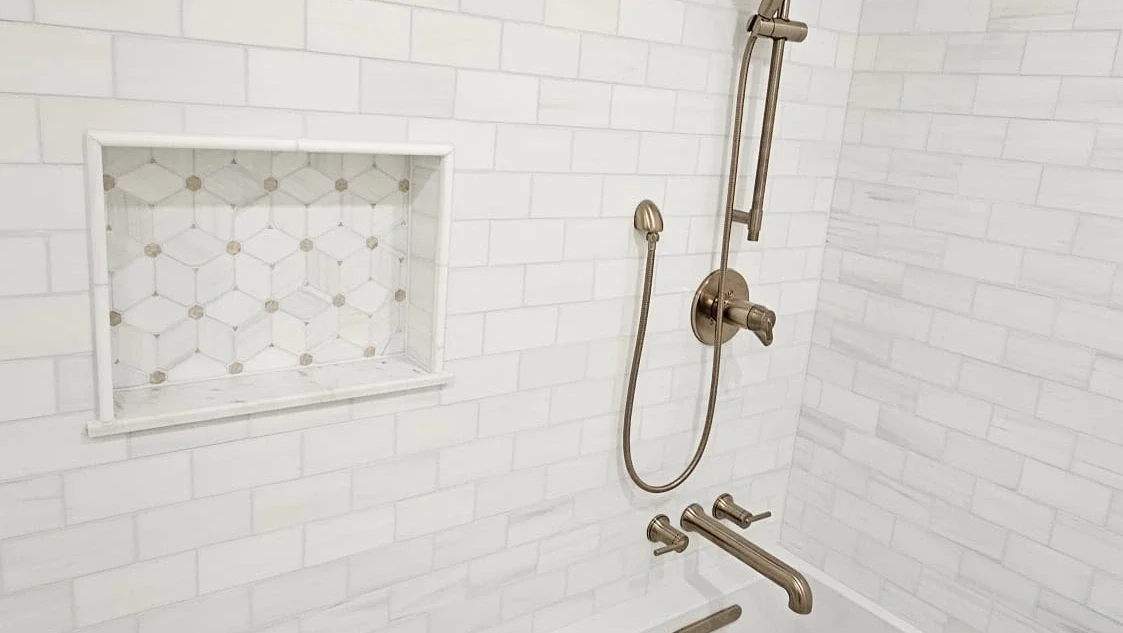
When Your Existing Tile Can Stay
Not every bathroom renovation requires new tile. Some situations justify keeping what you have.
Tile in excellent condition (less than 10 years old, no damage). If your tile looks good, the grout is intact, and you’re just updating fixtures or paint, leave it alone. Quality tile lasts 20 to 50 years when properly installed.
Budget constraints with minor cosmetic updates. Refinishing or regrouting can refresh a tile that’s structurally sound but aesthetically not doing it’s job anymore.
Tile that matches your new design direction. Sometimes existing tile works perfectly with updated colors and fixtures. No sense replacing something that already fits your vision.
The problem is that most bathroom renovations reveal issues once you start opening walls or moving fixtures. That “good enough” tile often hides problems you can’t see until the work begins.
The Reality of Tile Replacement
Let’s talk about what actually goes into replacing bathroom tile and why it’s usually the right call.
You Can’t See What’s Behind It
Every contractor knows this: you don’t really know what you’re dealing with until the old tile comes off. Water damage, failed waterproofing, compromised substrate, sometimes even structural issues. Trying to work around questionable tile means building on a foundation you haven’t verified.
The waterproofing question. Older bathrooms often lack proper waterproofing membranes. Building codes have changed. If your tile dates back 15 or 20 years, the waterproofing underneath probably doesn’t meet current standards. New tile gives you the chance to do it right.
Design Flexibility vs. Design Constraints
Working around existing tile limits everything else. The new vanity needs to fit the old tile layout. Wall colors need to complement tile you didn’t choose. Light fixtures, towel bars, even paint selections all get dictated by tile that’s staying.
Replace the tile, and suddenly you control the entire design. Pick the vanity you actually want. Choose colors based on your preferences, not based on what coordinates with 15-year-old tile.
The Cost Calculation That Matters
Yes, new tile costs money. A standard 5×8 bathroom runs $2,000 to $4,500 for floor and wall tile replacement (materials and labor). But consider what happens if you skip it:
- Moisture problems develop behind old tile ($3,000 to $8,000 to repair damaged framing and subfloor)
- Mold remediation becomes necessary ($1,500 to $6,000)
- Tile failures require emergency repairs at premium rates
- You’re stuck with design compromises in a bathroom you use every day
New tile costs more upfront while failed old tile costs more overall.
The Tile Over Tile Temptation
Some contractors suggest tiling over existing tile to save time and money but here’s why that usually creates more problems than it solves.
Tiling over tile adds height. Door clearances change, toilet flanges need adjusting, transitions to adjacent rooms become awkward, and you still haven’t addressed what’s underneath that original tile layer that could be completely rotted.
The adhesion problem. New tile bonds to old tile and not to what’s below it. If the original installation has any movement or weakness then both layers can fail and now you’ve just doubled the removal cost when that happens.
The inspection problem. You’re covering up the very thing you should be inspecting. Any existing water damage, substrate issues, or waterproofing failures remain hidden until they get worse.
Of course, none of this comes free so let’s break down the actual numbers.
What Tile Replacement Actually Costs
Material costs vary widely based on tile selection:
- Basic ceramic: Anywhere from $2 to $5 per square foot
- Mid-range porcelain: Anywhere from $5 to $12 per square foot
- Premium porcelain or natural stone: Anywhere from $12 to $30+ per square foot
Labor adds $5 to $15 per square foot for installation, depending on tile size, pattern complexity, and surface preparation required.
Full bathroom tile replacement (100 to 150 square feet including walls and floor):
- Budget range: $2,000 to $4,500
- Mid-range: $4,500 to $8,000
- High-end: $8,000 to $15,000+
Timeline runs 3 to 7 days for most bathrooms: 1 day for demolition and prep, 2 to 3 days for installation, 1 to 2 days for grouting and finishing, plus 24 hours of cure time before use.
Choosing Tile That Actually Works
Here’s something that catches homeowners off guard: not all bathroom tile is created equal.
Porcelain handles moisture better than ceramic. It’s denser, less porous, and more resistant to water absorption. For shower walls and floors, porcelain makes sense. For low-moisture areas, ceramic works fine and costs less.
Larger tiles mean fewer grout lines. Less grout means less maintenance and fewer places for water to penetrate. A 12×24 tile layout cleans easier than 4×4 tiles and looks more modern.
Textured floor tile prevents slips. Glossy tile looks great on walls but creates hazards on floors. Look for tiles rated for slip resistance (who would’ve thought that a wet bathroom floor might be slippery?).
Neutral colors age better than trendy patterns. Bold geometric patterns look great now but in five years, they’ll remind you of 5 years ago when you though rainbow was a good idea. Classic subway tile, neutral stone looks, and simple patterns work with changing design preferences.
Common Tile Mistakes to Avoid
Matching floor and wall tile. Using identical tile everywhere makes your bathroom feel flat and monotonous. Vary the size, finish, or pattern between surfaces.
Ignoring grout color. White grout shows every bit of dirt and requires constant maintenance. Gray or taupe grout hides discoloration better and still looks clean.
Skipping the waterproofing membrane. This isn’t optional because proper waterproofing behind tile prevents the moisture damage that ruins bathrooms. Budget somewhere around $300 to $800 for professional waterproofing in a standard bathroom.
Choosing tile before planning the layout. Tile size affects your layout so plan your layout first then select tile that works with your room dimensions and minimizes cuts.
Planning Your Tile Decision
Start by having a contractor assess your existing tile and substrate. Get honest feedback about what you’re dealing with.
Get detailed quotes that break out demolition, waterproofing, substrate prep, tile installation, and finishing. You want to know where the money goes.
Plan for contingencies. Budget an extra 15% to 20% for surprises uncovered during demolition. Old bathrooms almost always reveal something unexpected.
Permits matter. Most bathroom renovations involving plumbing or structural changes require permits. Check with your local building department before work begins. Permit costs run anywhere from $100 to $500 depending on scope and location.
Making the Call
New tile makes sense for most bathroom renovations. It provides verified waterproofing, eliminates hidden problems, and gives you complete design control. The upfront cost pays off in long term durability and peace of mind.
Keep existing tile only if it’s recent, damage free, and fits your design vision perfectly. Even then make sure you have a contractor verify the waterproofing and substrate condition.