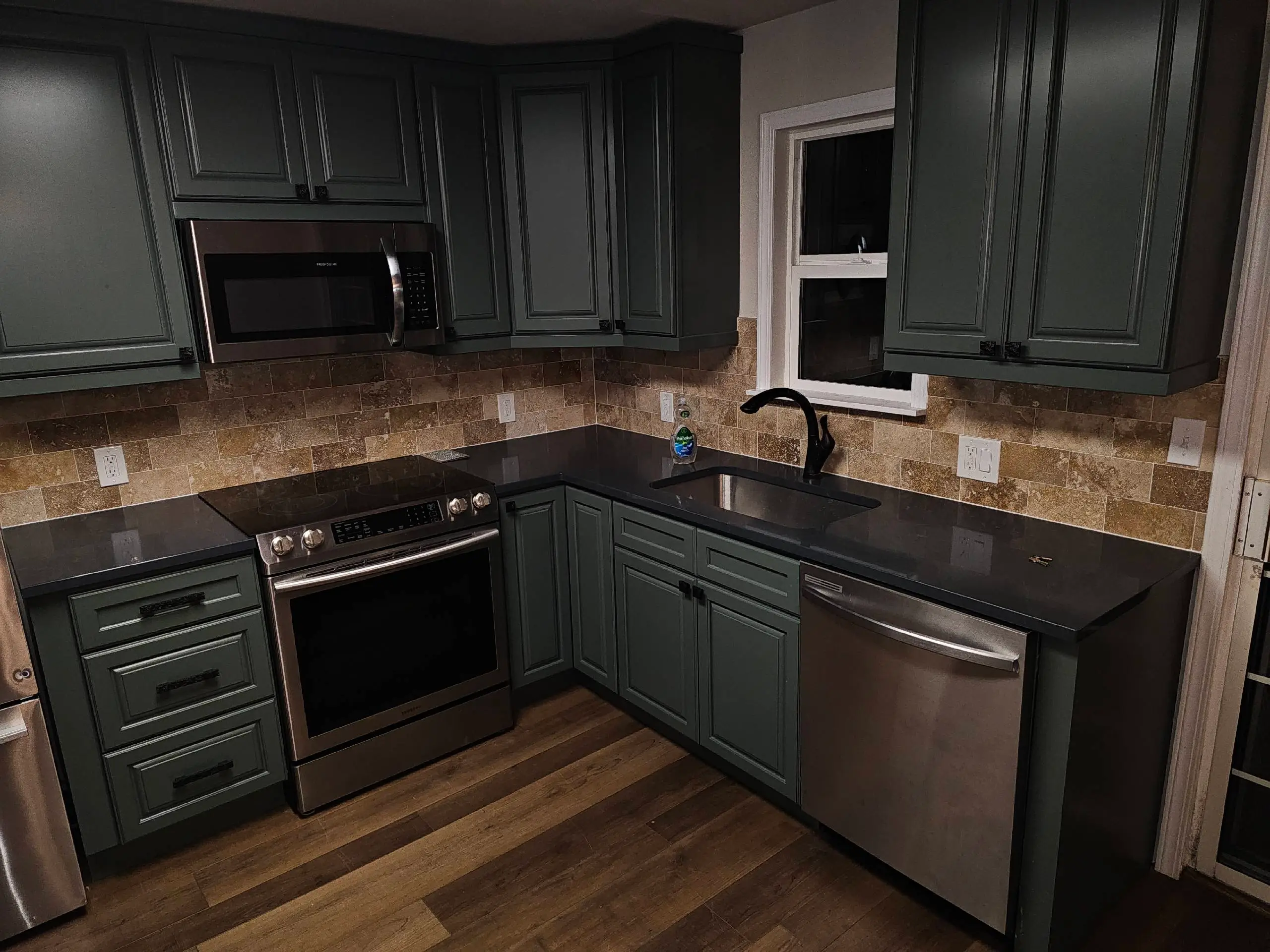
The Financial Reality of DIY Kitchen Remodeling
Budget drives most DIY decisions, and that makes sense. Labor typically accounts for 25-40% of total kitchen remodeling costs. On a $40,000 project, you’re looking at $10,000-$16,000 in labor savings if you handle everything yourself.
But here’s where it gets tricky. That math only works if nothing goes wrong. Most kitchen remodels in 2025 run between $15,000 and $45,000 depending on scope, with mid-range projects averaging around $27,000-$40,000. High-end renovations easily exceed $75,000.
When you DIY, you’re still buying materials at retail prices. Contractors get wholesale pricing on cabinets, countertops, and appliances that can offset some of their labor costs. So your actual savings might be closer to 15-20% of the total project cost, not the full labor percentage.
What You Can Realistically Handle
Alright, let’s talk about projects that make sense to DIY. Some kitchen tasks are genuinely doable without professional training.
Painting cabinets is probably the best DIY bang for your buck. With proper prep work (sanding, priming, multiple coats), you can transform tired cabinets for $200-$500 in materials. It takes patience and a weekend or two, but the process is forgiving and reversible if you mess up.
Backsplash installation falls into the same category. Peel and stick options have gotten surprisingly good, and even traditional tile backsplash is manageable if you can follow a pattern and work carefully. Budget $500-$1,500 for materials because here the the main risk is aesthetic, not structural. Worst case, you tear it off and redo it.
Hardware updates require nothing more than a drill and some patience. New cabinet pulls, drawer handles, and lighting fixtures can update your look for $300-$800. This is genuinely hard to screw up.
Floor painting or refinishing also works for DIY. You’ll need proper ventilation and time for the finish to cure, but it’s straightforward work.
Where DIY Gets Expensive Fast
This all does come with real risk though because the projects that seem simple can uncover expensive problems that demand professional fixes.
Cabinet installation looks deceptively easy on YouTube but here’s a reality check: cabinets must be perfectly level, securely anchored to studs, and precisely aligned. One crooked base cabinet throws off your entire countertop. A professional cabinet installation runs $2,000-$8,000 depending on kitchen size, but redoing a botched DIY install costs even more.
Countertop work requires specialized tools for cutting and finishing. Stone countertops like granite or quartz cost $50-$150 per square foot installed. Templates for fabrication must be exact because there’s no room for error with a $3,000-$7,000 slab. One bad measurement and you’re buying another slab to cut out a countertop.
Here’s the thing about demolition: it feels therapeutic to swing a sledgehammer, but you can cause serious damage. Load-bearing walls require structural engineering. Asbestos containing materials, which are common in homes built before 1980, need professional abatement that can cost minimum $1,500-$3,000 minimum. One demolished wall that shouldn’t have been touched can run $5,000-$15,000 to repair correctly.
The Permit Problem Nobody Mentions
Let’s talk about something that trips up most DIYers: permits. Any structural changes, electrical work, or plumbing modifications require building permits in virtually every municipality. This isn’t optional.
Permits can cost anywhere from $500-$2,000 depending on scope and location. They’re not just paperwork. They ensure your work meets safety codes and won’t burn down your house or flood your basement. Think that’s dramatic? Insurance companies can deny claims for damage related to unpermitted work so think twice before you skip the permit.
More importantly, unpermitted renovations show up during home sales. Inspectors catch them and you’ll usually be forced to pay a hefty fine, bring everything up to code, and or be forced to watch buyers walk away because of the liability cutting a $500 corner caused. Some banks won’t finance homes with unpermitted renovations.
Getting permits after work is finished costs more than doing it right the first time so just count on paying the original permit fee plus penalties, plus the cost of opening walls to let inspectors verify work, plus fixing anything that doesn’t meet code.
Why Electrical and Plumbing Aren’t DIY Projects
Here’s where we need to be blunt: electrical and plumbing work requires licensed professionals in most areas, and for good reason.
One reversed wire can energize your entire sink and cabinetry. One loose connection can start a fire inside your walls months after you finish. Electrical work gone wrong doesn’t just fail, it endangers your family. Electricians charge $50-$100 per hour, but they carry insurance and know current code requirements that change regularly.
Plumbing mistakes create different nightmares. A sink that drains slowly seems minor until you realize you didn’t vent it properly and sewer gases are backing up into your home. A supply line that’s almost tight enough will drip behind your beautiful new cabinets, rotting your floor joists over months or years. Water damage repairs start at $2,000 and climb fast if mold gets involved.
Professional plumbers cost $1,000-$3,000 for typical kitchen remodeling work (relocating sink, dishwasher hookup, disposal installation). That’s cheap compared to fixing water damage that insurance won’t cover because you did it yourself.
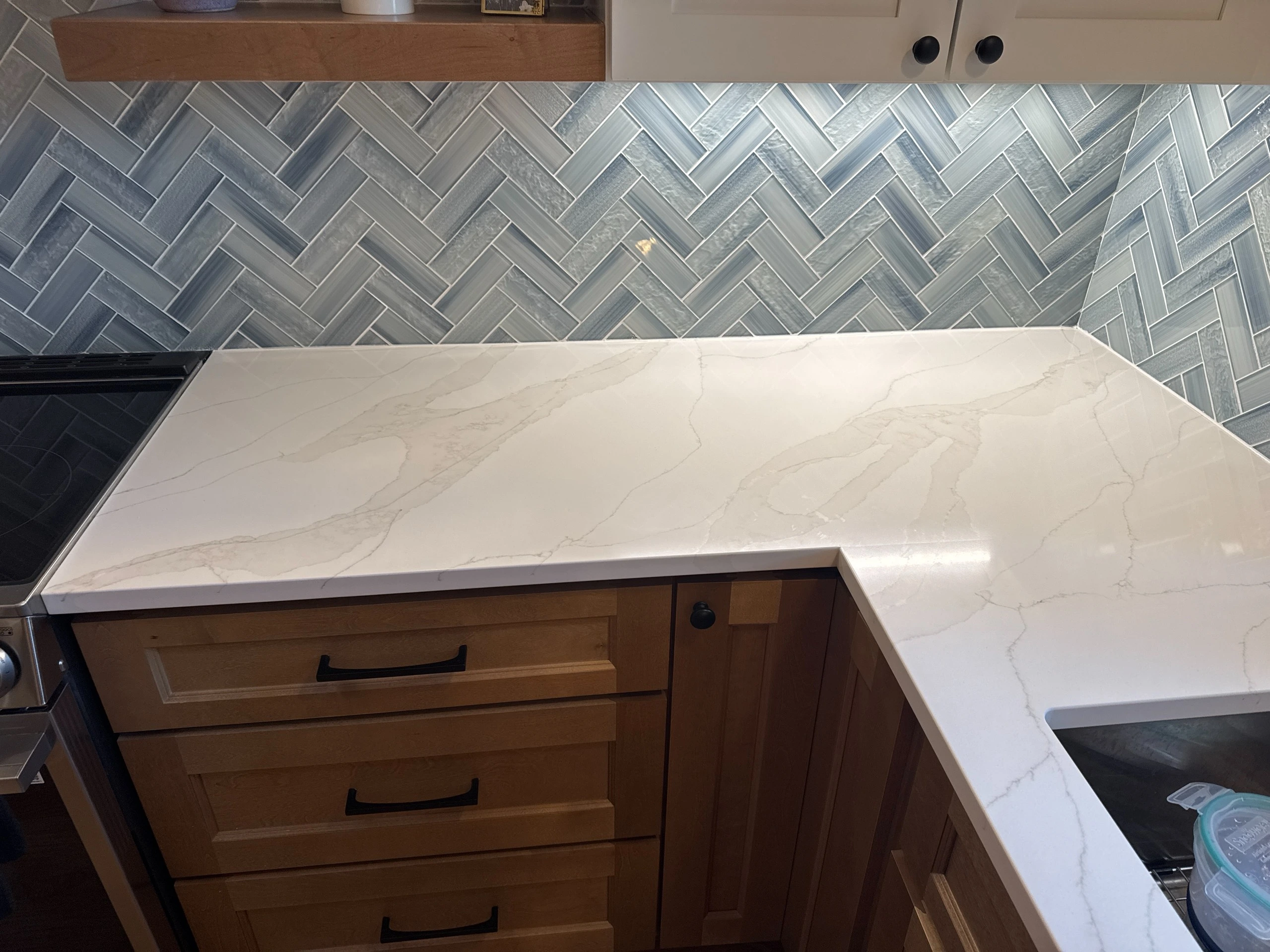
The Timeline Nobody Warns You About
Time is money, and DIY kitchen remodeling devours both. Professional contractors complete typical kitchen renovations in 6-10 weeks. DIYers should triple that estimate.
It’s because you’re working nights and weekends around your actual job, you’re learning as you go, and that “simple” task hits a snag and you spend three evenings watching YouTube videos trying to figure out what went wrong.
Most DIY kitchen remodels take 4-6 months at minimum and some stretch beyond a year. So just to account that’s months of eating takeout, washing dishes in the bathroom, and living in construction dust. Your temporary inconvenience becomes permanent lifestyle disruption.
While a kitchen remodel done professionally may take 8-16 weeks maximum.
Projects also take longer because you can’t overlap tasks the way contractors do. Professionals run electrical while someone else installs cabinets. You do everything sequentially, solo. The difference adds weeks to your timeline.
When Hiring Professionals Actually Saves Money
As counter intuitive as it sounds, professional kitchen remodeling companies often save you money on complex projects. They avoid expensive mistakes, complete work faster, and their warranty protects you from future problems.
A kitchen remodeling company brings specialized crews for each task: electricians, plumbers, cabinet installers, tile setters. They coordinate the sequence so nothing waits on something else. Material orders arrive on schedule because they know exact lead times for everything.
Most contractors include a 1-2 year warranty on workmanship so if something fails, they fix it. Your DIY work has no such safety net. A $500 repair because of your negligence becomes your problem six months later when you discover it.
Professional projects also maintain your home’s value better. Quality work shows during inspections and appraisals. Buyers trust permitted, professionally completed renovations over DIY work because they know it meets code and was done correctly.
The Hybrid Approach That Makes Sense
Here’s what works for most homeowners: tackle cosmetic updates yourself and hire pros for anything technical or structural.
You paint cabinets and walls. Professionals handle electrical, plumbing, and gas lines. You install the peel-and-stick backsplash. They template and install countertops. You swap out hardware and light fixtures. They ensure everything functions safely and meets code.
This hybrid approach cuts your labor costs 10-15% while avoiding the catastrophic mistakes that could double your total budget. You get the satisfaction of personal involvement without risking your home’s safety or value.
Budget for this approach by getting quotes from contractors for the technical work, then allocating 20-30% of remaining budget for your DIY portions plus a 10-15% contingency fund for surprises.
Planning Your Project: What to Do Before Anything Else
Whether you DIY or hire help, planning determines success. Start by setting a realistic budget that includes 10-15% contingency for unexpected issues. Every kitchen remodel uncovers something: old wiring that needs updating, water damage behind the sink, a floor that’s not level.
Measure your kitchen carefully. Take photos from multiple angles. Create a wishlist of changes, then prioritize based on impact and budget. Maybe you skip new appliances this time but splurge on better cabinets.
Research material costs before committing to your plan. Visit home improvement stores with your measurements. Get real numbers for cabinets ($3,000-$25,000), countertops ($1,500-$7,000), flooring ($1,000-$5,000), and appliances ($2,000-$10,000). This prevents that sinking feeling when your $30,000 vision actually costs $55,000.
Making the Decision: Questions to Ask Yourself
Be honest about three things before you decide.
Do you have the time? Most people underestimate by 2-3x. If you think it’ll take six weeks, plan for four months. Can you live in a construction zone that long without losing your mind?
Do you have the skills? Watching videos isn’t the same as doing the work. Have you successfully completed similar projects? Can you troubleshoot when things go wrong, or will you be calling professionals to rescue your half-finished project (which costs more than hiring them first)?
Can you afford mistakes? Every DIYer makes them. Some are $50 fixes (wrong paint color). Others cost thousands (damaged subfloor, broken tile). Do you have financial cushion for errors?
If you answer “no” to any of these, scaling back your DIY ambitions makes sense. There’s no shame in recognizing where professional help protects your investment.
What to Expect: Real Numbers for 2025
Let’s ground this in current market reality. A basic cosmetic refresh (paint, hardware, backsplash) runs $5,000-$12,000 DIY or $8,000-$18,000 with pros. Figure 2-4 weeks for professional work, 1-2 months DIY.
A mid-range renovation with new cabinets, countertops, and appliances but keeping the same layout costs $25,000-$55,000. Timeline: 6-10 weeks with contractors, 4-6 months DIY.
Full gut renovations that move walls, relocate plumbing, and rebuild everything run $50,000-$100,000+. These take 10-16 weeks minimum with professionals. DIY isn’t realistic for this scope because you’ll need licensed contractors for most of the work anyway.
Your exact costs depend on kitchen size, material choices, and regional labor rates, but these ranges reflect 2025 market conditions.
Bottom Line: Making the Choice That Works for You
DIY kitchen remodeling offers real savings on straightforward cosmetic updates. Paint, backsplash, hardware, and similar projects make sense if you have time and basic handyman skills. You’ll save $2,000-$5,000 on a modest refresh.
But anything involving electrical, plumbing, structural changes, or precision installation (cabinets, countertops) tilts the math toward professionals. The risk of costly mistakes, permit violations, and timeline overruns outweighs potential savings.
Most successful kitchen remodels use a hybrid approach: DIY what you can handle, hire a kitchen remodeling company for technical work. This protects your investment while keeping costs reasonable. Your kitchen is the heart of your home. Sometimes the smartest DIY decision is knowing when to bring in help.