Where the Kitchen Triangle Came From
The kitchen triangle didn’t just appear out of nowhere. In the 1940s, researchers at the University of Illinois School of Architecture developed this concept to make kitchens more efficient and cut construction costs. Before this, kitchens were often poorly planned spaces where cooks wasted countless steps moving between work areas.
The idea caught on because it worked. Home builders and remodeling companies started using it as a standard practice. For decades, the kitchen triangle has been the go-to layout principle for residential kitchen design. It’s based on solid ergonomic research about how people actually move and work in kitchens.
How the Kitchen Triangle Actually Works
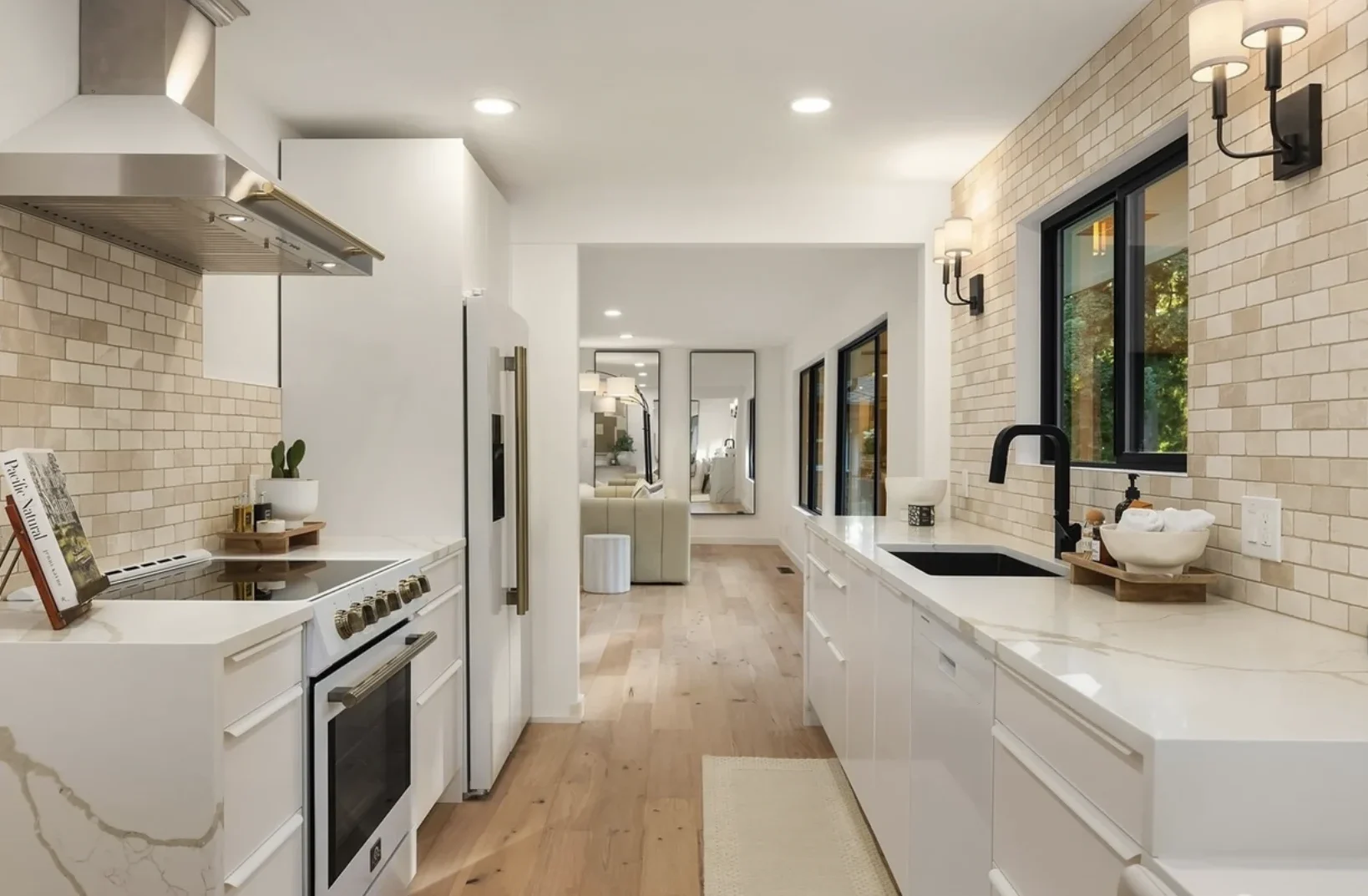
Alright, let’s talk about the specifics. The three points of your kitchen triangle are:
- The sink (your cleaning and prep zone)
- The stove or cooktop (your cooking zone)
- The refrigerator (your food storage zone)
These are the areas you’ll visit most often while preparing any meal. Think about making breakfast: you grab eggs from the fridge, rinse vegetables at the sink, and cook everything on the stove. The triangle keeps these movements efficient.
The Numbers That Matter
The classic kitchen triangle follows some basic measurements. Each side of your triangle should measure between 4 and 9 feet. If they’re closer than 4 feet, your kitchen will feel cramped. If they’re farther than 9 feet apart, you’ll waste time walking back and forth.
The total perimeter of all three sides combined should fall between 13 and 26 feet. This gives you enough workspace without creating a marathon route between your appliances. These measurements aren’t random. They’re based on decades of data about kitchen efficiency and human movement patterns.
Nothing should interrupt the triangle’s flow. That means no kitchen islands, dining tables, or other obstacles blocking the path between your three main work zones. Traffic from other parts of the house shouldn’t cut through the middle of your cooking area either.
Does This Still Matter in Modern Kitchens?
Here’s the thing: kitchens have changed a lot since the 1940s. Today’s kitchens are bigger, more open, and often serve multiple purposes. They’re not just cooking spaces anymore. They’re homework stations, social hubs, home offices, and entertainment zones.
Most families now have multiple people cooking at once. One person might be making dinner while another packs school lunches or loads the dishwasher. The original kitchen triangle was designed for a single cook working alone. That’s not how most households operate today.
But the basic principle still holds value. Efficient movement between your main work zones will always make sense. The triangle just needs to adapt to fit modern life. When we plan kitchen remodeling projects, we start with the triangle concept and then expand it to accommodate your family’s specific needs.
Kitchen Triangle with Islands: Making It Work
Islands don’t have to destroy your kitchen triangle. In fact, they can enhance it when positioned correctly. You can incorporate one of your triangle points directly into the island. Common options include placing your cooktop, a prep sink, or even refrigerator drawers in the island.
The key is keeping clear paths around the island. You need at least 42 inches of clearance on all sides for comfortable movement. If you have multiple cooks, aim for 48 inches to prevent collisions during busy meal prep times.
Some homeowners put their main sink in the island, which can work beautifully if your island is positioned right. Others prefer keeping the sink on a perimeter wall and using the island as additional prep space that’s accessible from all sides of the triangle.
Modern Kitchen Zones: Beyond the Triangle
Today’s kitchen remodeling projects often incorporate multiple work zones beyond the basic triangle. This approach recognizes that kitchens now handle way more than just cooking dinner.
Common kitchen zones include:
- Coffee station with your coffee maker, grinder, mugs, and supplies
- Baking zone with stand mixer and baking sheets
- Beverage station for drinks and glassware
- Kids’ snack area positioned away from hot cooking zones
- Meal prep zone with cutting boards, knives, and prep bowls
These additional zones let multiple people use the kitchen simultaneously without getting in each other’s way. The trick is positioning them so they don’t interfere with the main cooking triangle but remain easily accessible.
What Kitchen Remodeling Actually Costs
Let’s talk money. A full kitchen remodeling project typically ranges from $15,000 to $60,000 for most homes. Higher-end remodels can push past $100,000.
The layout changes we’re discussing (moving appliances, adding islands, creating new zones) fall into the structural category. Moving plumbing for your sink will cost $500 to $2,000. Relocating gas lines for your stove runs $500 to $1,500. Adding electrical circuits costs $200 to $800 per circuit.
Custom cabinetry will likely be your biggest expense, running $4,000 to $20,000 depending on materials and finishes. Stock cabinets offer budget-friendly options at $2,000 to $8,000 for an average kitchen.
Don’t forget about permits. Most communities require permits for kitchen remodeling that involves plumbing, electrical, or structural changes. Permit costs typically run $500 to $2,000.
Timeline Expectations for Kitchen Remodeling
A complete kitchen remodeling project takes 6-12 weeks on average. Here’s how that breaks down:
Planning and design: 2-4 weeks
Permitting: 2-4 weeks
Demolition: 1-3 days
Rough-in work (plumbing, electrical): 3-7 days
Drywall and flooring: 5-10 days
Cabinet installation: 3-5 days
Countertop installation: 1-2 weeks
Final touches: 2-3 days
Material delays can push these timelines back. Custom cabinets often have 6-8 week lead times. Always build buffer time into your schedule.
Planning Your Kitchen Remodeling Layout
Start by thinking about how you actually use your kitchen. Do you bake every weekend? You’ll want a dedicated baking zone. Got kids who raid the fridge after school? Position your refrigerator where they can access it without walking through the cooking area.
Measure your existing space carefully. Note where your plumbing, gas lines, and electrical outlets currently sit. Moving these adds cost, so sometimes it’s smarter to work with what you have.
Consider who cooks in your household. If you regularly have multiple cooks working together, you might need two sinks or multiple prep areas. Think about your appliances too. Drawer-style dishwashers, refrigerator drawers, and warming drawers can be positioned in secondary zones without disrupting your main triangle.
When to Break the Triangle Rules
Sometimes the triangle just doesn’t fit. Galley kitchens, L-shaped layouts, and open-concept spaces might need different approaches. The goal isn’t following rules blindly. The goal is creating an efficient kitchen that works for your life.
Small galley kitchens often work better with a two-zone layout. Put your sink and stove on one side, refrigerator on the other, and maximize counter space in between.
Large open kitchens might need multiple work triangles. You could have a main cooking triangle plus a secondary cleanup triangle with a second sink and dishwasher. This lets two people work without colliding. If you love entertaining, you might prioritize a large island with seating over a perfect triangle.
Who would’ve thought that a design concept from the 1940s would still spark so much debate? The triangle endures because the underlying principle (minimize wasted movement) never goes out of style.
Storage and Organization Within Your Triangle
Here’s something people often overlook: what you store near each triangle point matters as much as the layout itself. Your pots and pans should live near the stove. Cutting boards and knives belong near your main prep sink. Food storage containers make sense near the refrigerator.
Consider pull-out organizers near your stove for oils, spices, and utensils. Install deep drawers near your sink for pots that need washing. Add a pull-out trash and recycling center between your sink and refrigerator where you naturally handle food waste. These organizational features turn dead space into functional storage that supports your workflow.
Lighting Your Kitchen Work Triangle
Proper lighting makes any layout work better. Each point of your triangle needs its own dedicated task lighting. Under-cabinet lights illuminate your countertops for food prep. Pendant lights over an island provide focused light for cooking or eating.
Your sink needs bright, shadow-free lighting for washing dishes and vegetables. LED strip lights under upper cabinets work well here. Recessed ceiling lights or track lighting can highlight your stove area. Some range hoods include built-in lights, but adding supplemental lighting ensures you can see what you’re cooking without shadows.
Layer task lighting with ambient ceiling fixtures for a kitchen that’s both functional and inviting.
Common Kitchen Triangle Mistakes to Avoid
Putting your refrigerator too far from the main cooking zone is a frequent error. People open the fridge multiple times while cooking. If it’s positioned 15 feet away, those trips add up fast.
Another mistake: placing the dishwasher on the wrong side of the sink. Your dishwasher should sit between the sink and your dish storage. This creates a logical flow from dirty dishes to storage.
Don’t position your stove or cooktop on an island without proper ventilation. Make sure you have the ceiling height and ductwork routing figured out first. Avoid putting your sink or cooktop in a corner where you lack landing space on both sides.
Never sacrifice storage for the sake of maintaining a perfect triangle. A kitchen that flows beautifully but lacks adequate cabinet space won’t serve you well long-term.
Working with a Remodeling Company
Professional guidance makes a real difference with kitchen layouts. A good remodeling company brings experience from hundreds of kitchens. We’ve seen what works and what doesn’t in real-world use.
Expect detailed questions about your cooking habits, family size, and entertaining style. These conversations inform layout decisions that generic triangle rules can’t address. Quality contractors use 3D design software to show you exactly how your new layout will function.
Ask potential contractors about their kitchen workflow design experience. Request photos of previous projects and talk to past clients about how well the finished kitchens work for daily use.
Making Your Final Layout Decisions
Start by identifying your non-negotiables. Maybe you absolutely need a large island for homework and meal prep. Perhaps you require a walk-in pantry. List these priorities first. Next, identify your “nice to haves” that you’ll include if budget and space allow.
Create a rough sketch of your space with the triangle marked out. Try different appliance positions. Move your island around. This early exploration helps clarify what will and won’t work before you commit to specific products.
Don’t rush this planning phase. Making changes on paper costs nothing. Making changes after cabinets are ordered costs thousands.
The Kitchen Triangle Wrap-Up
The kitchen triangle remains a valuable starting point for kitchen remodeling projects. It creates efficient workflow by minimizing wasted movement between your sink, stove, and refrigerator. The basic measurements (4-9 feet between points, 13-26 feet total perimeter) provide useful guidelines for most layouts.
Modern kitchens benefit from expanding beyond the basic triangle. Adding dedicated zones for coffee, baking, beverages, and snacks lets multiple people use the kitchen simultaneously. These secondary zones should complement, not interrupt, your main cooking triangle.
Budget $15,000 to $60,000 for a complete kitchen remodeling project, with 6-12 weeks for construction. Higher-end projects cost more and take longer. Moving plumbing or gas lines adds both expense and time to your project.
What You Should Consider Next
Think about how you really use your kitchen today. Where do bottlenecks happen? What frustrates you about your current layout? Which features would make your daily routine smoother?
Measure your existing kitchen carefully. Note where utilities currently run. Take photos from every angle. Collect inspiration images of layouts that appeal to you, but focus on functionality over aesthetics.
Schedule consultations with experienced remodeling companies in your area. Discuss your lifestyle, budget, and timeline. Get detailed proposals that address workflow, not just appearances.
Your kitchen triangle doesn’t have to be perfect. It just needs to work for your household. Focus on creating a layout that reduces frustration, supports your cooking style, and accommodates everyone who uses the space. That’s what successful kitchen remodeling really delivers.